Call Us

-
-
-
Office Address
401 & 402, Smart Walls, Nr Science City Circle, SP Ring Road, Ahmedabad-380060, Gujarat (INDIA)
Office Address
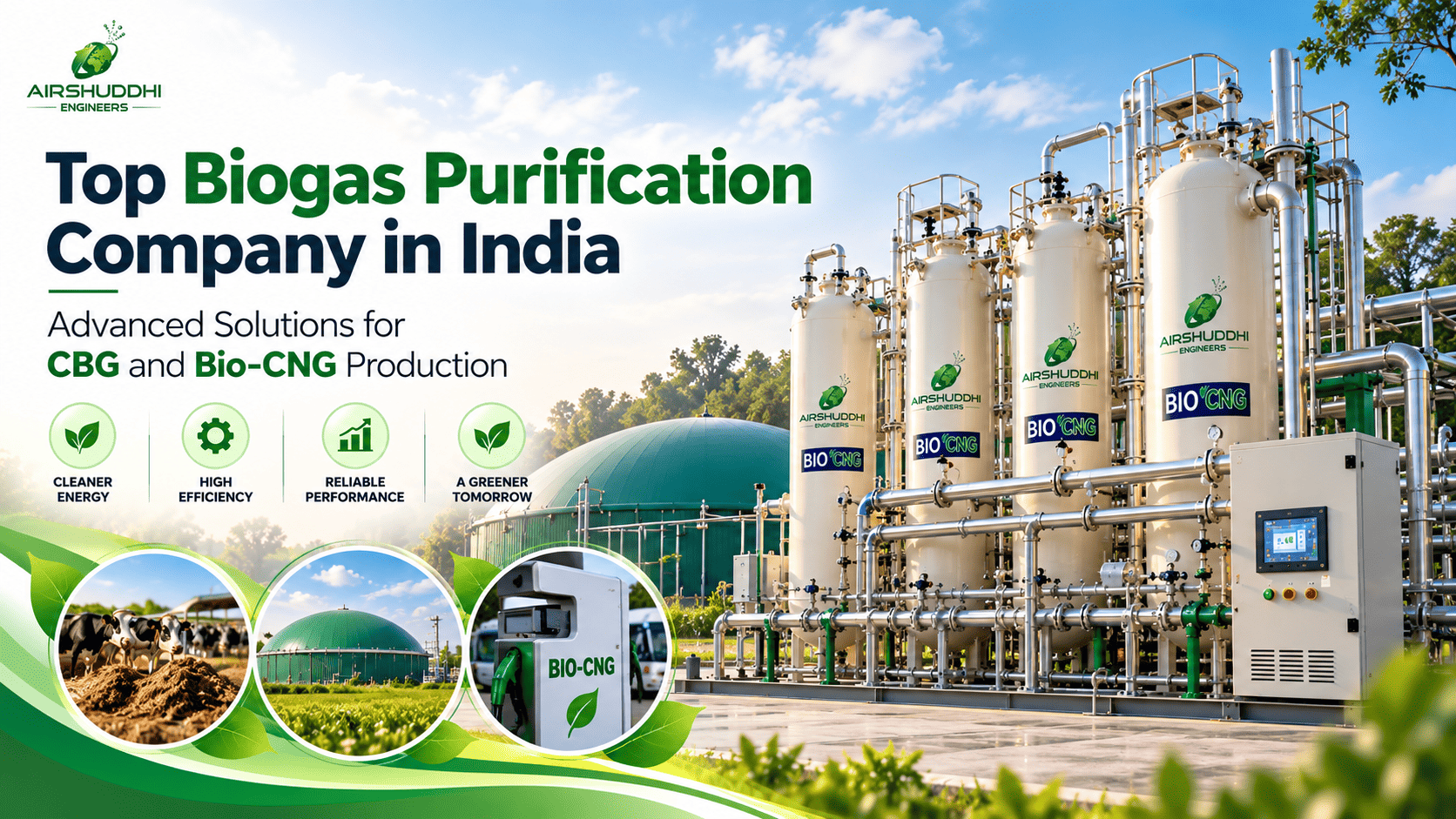
India's renewable-gas sector is moving toward larger and more integrated projects that can convert agricultural residues, cattle dung, food waste, industrial organic waste and other biodegradable materials into useful energy. As this market develops, the role of a reliable Biogas Purification Company is becoming increasingly important for businesses planning CBG, Bio-CNG and biomethane projects.
Raw biogas generated through anaerobic digestion contains methane along with carbon dioxide, hydrogen sulphide, moisture and other trace contaminants. Before the gas can be used for higher-value applications, it needs suitable treatment and upgrading. A well-engineered purification system can improve methane concentration, remove unwanted components and prepare the gas for compression, storage, transportation or end use.
The Indian CBG ecosystem is also becoming more structured. The recently launched GOBARdhan framework includes measures for CBG offtake, pricing, capital assistance, pipeline infrastructure, credit support and digital monitoring. The official GOBARdhan portal describes the CBG chain as organic waste and biomass moving through feed preparation, raw biogas production, purification and storage, compression and transportation, followed by end use.
For project developers, this makes the selection of a capable Biogas Purification Company in India an important technical and commercial decision.
A Biogas Purification Company provides technologies, equipment and engineering solutions to convert raw biogas into cleaner, methane-rich gas suitable for a specific application.
The exact system depends on feedstock, gas composition, production capacity and final gas requirements.
A typical purification solution may involve:
The important point is that purification is not a one-size-fits-all process. A suitable system must be engineered around the actual characteristics of the raw gas.
Raw biogas cannot simply be treated as a direct replacement for natural gas. Its composition changes according to the feedstock, digestion process and operating conditions.
The presence of excessive CO₂ reduces methane concentration, while H₂S and moisture can create operational problems for downstream equipment.
A properly designed Biogas Purification Plant can help address these issues by:
The GOBARdhan portal currently describes CBG as a renewable fuel with methane concentration exceeding 95%, highlighting the importance of purification and upgrading in the CBG value chain.
Today's projects require purification systems that balance gas quality, methane recovery, energy consumption, reliability and operating cost.
Advanced Biogas Purification Technology can include several technology routes, depending on the application.
Membrane-based systems use selective separation characteristics to remove CO₂ and other components from biogas.
Potential advantages include:
Membrane systems can be particularly attractive where space, modularity and continuous gas processing are important considerations.
Pressure Swing Adsorption uses adsorbent materials to selectively retain certain gas components under pressure.
A PSA Biogas Purification Plant can be designed for methane enrichment and CO₂ separation.
The technology can be configured according to:
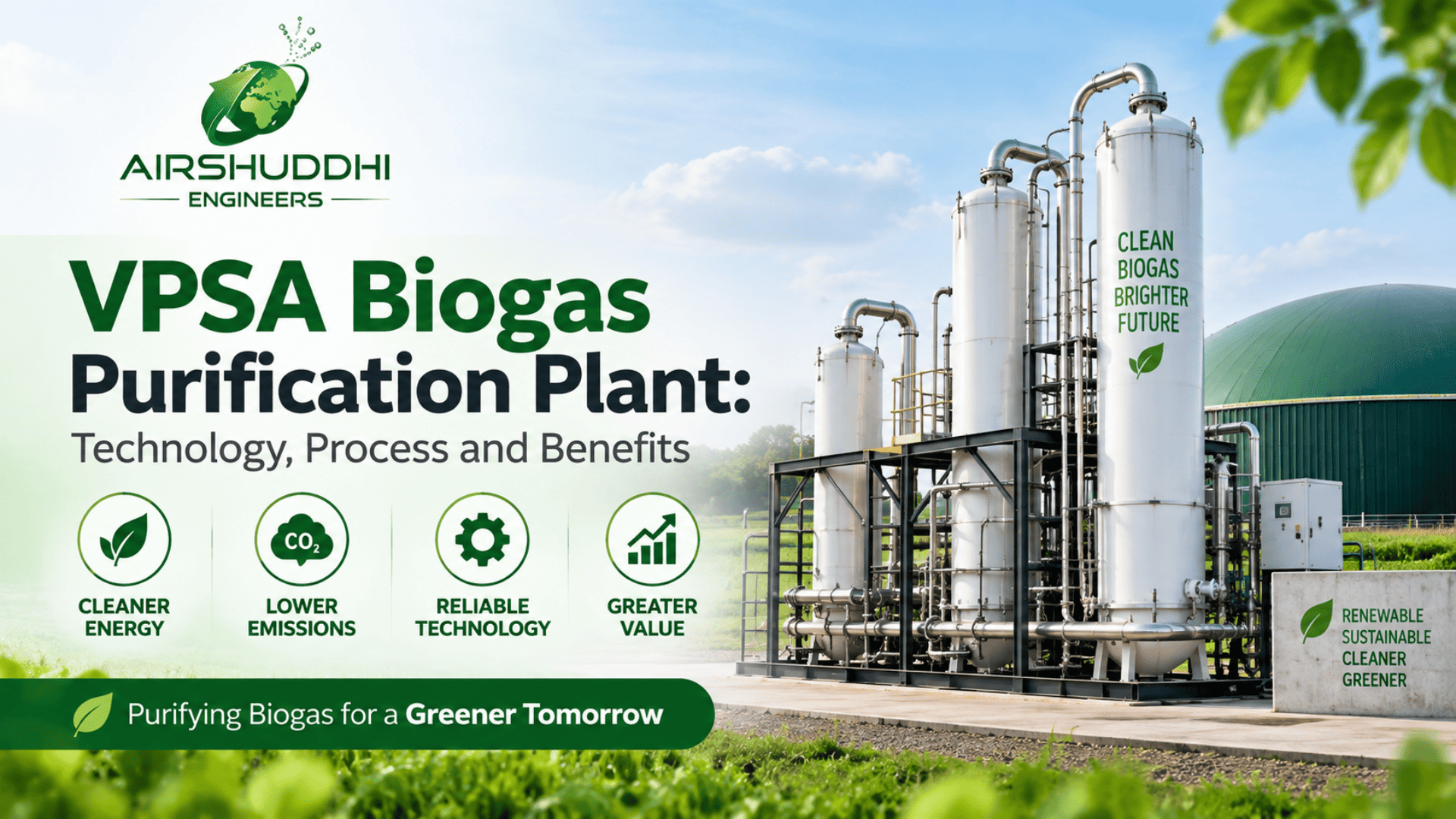
Vacuum-assisted adsorption systems are another technology route for biogas upgrading. Recent technical research continues to examine VPSA configurations for improving methane purity and recovery while also exploring opportunities to recover concentrated biogenic CO₂.
This is particularly relevant as future biogas projects increasingly look beyond methane production alone and consider resource recovery from the complete gas stream.
A professional Biogas Purification Company should not recommend a technology simply because it is commonly used.
The selection should begin with a detailed assessment of the project.
Important parameters include:
Different upgrading technologies have different operating characteristics. The World Biogas Association notes that technology selection depends on feed gas composition, plant scale, site conditions and economic factors.
Therefore, a technology recommendation should be based on engineering analysis rather than a generic product comparison.
A modern renewable-gas project can be viewed as a connected process rather than an individual purification machine.
The overall chain may look like:
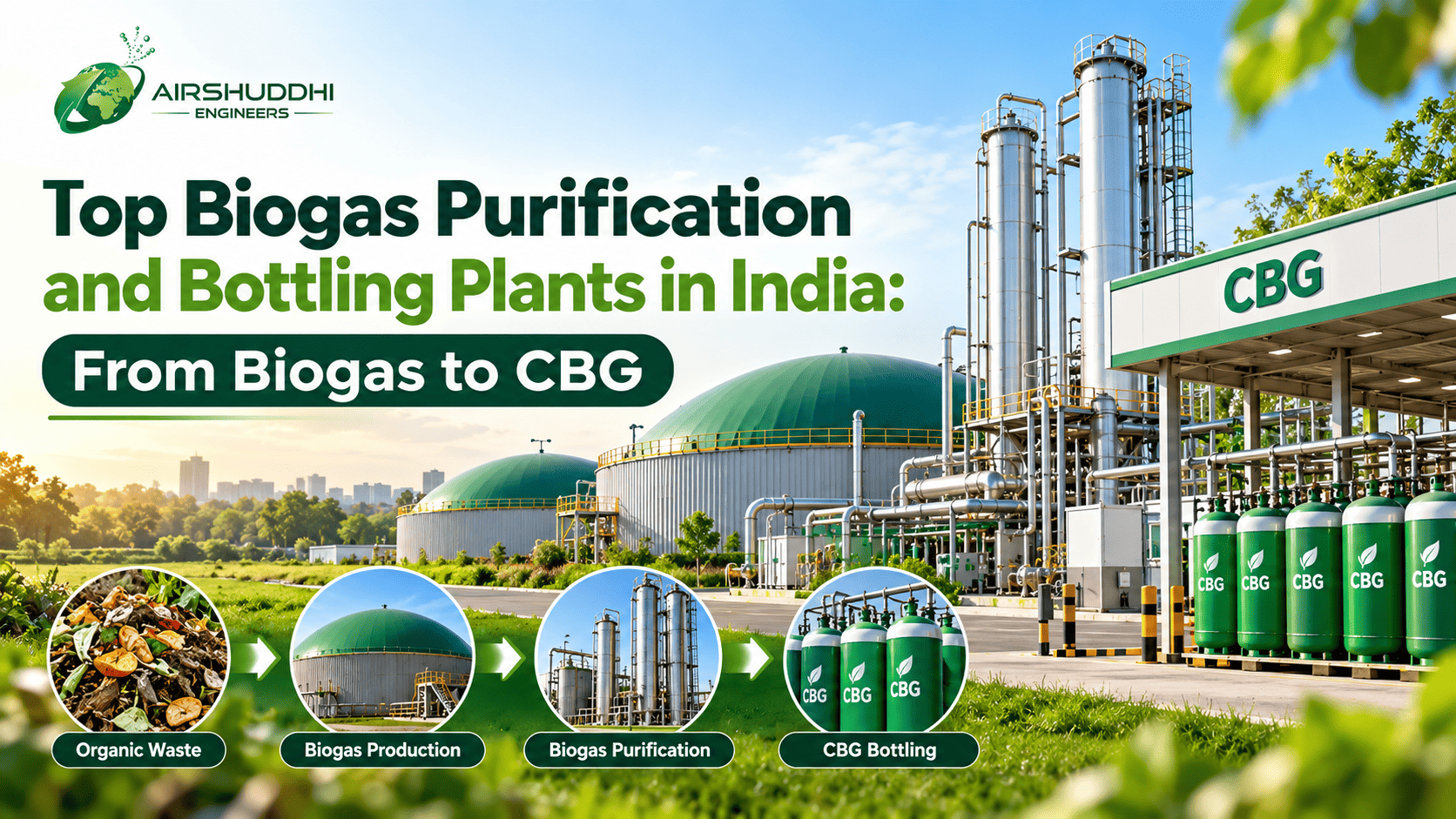
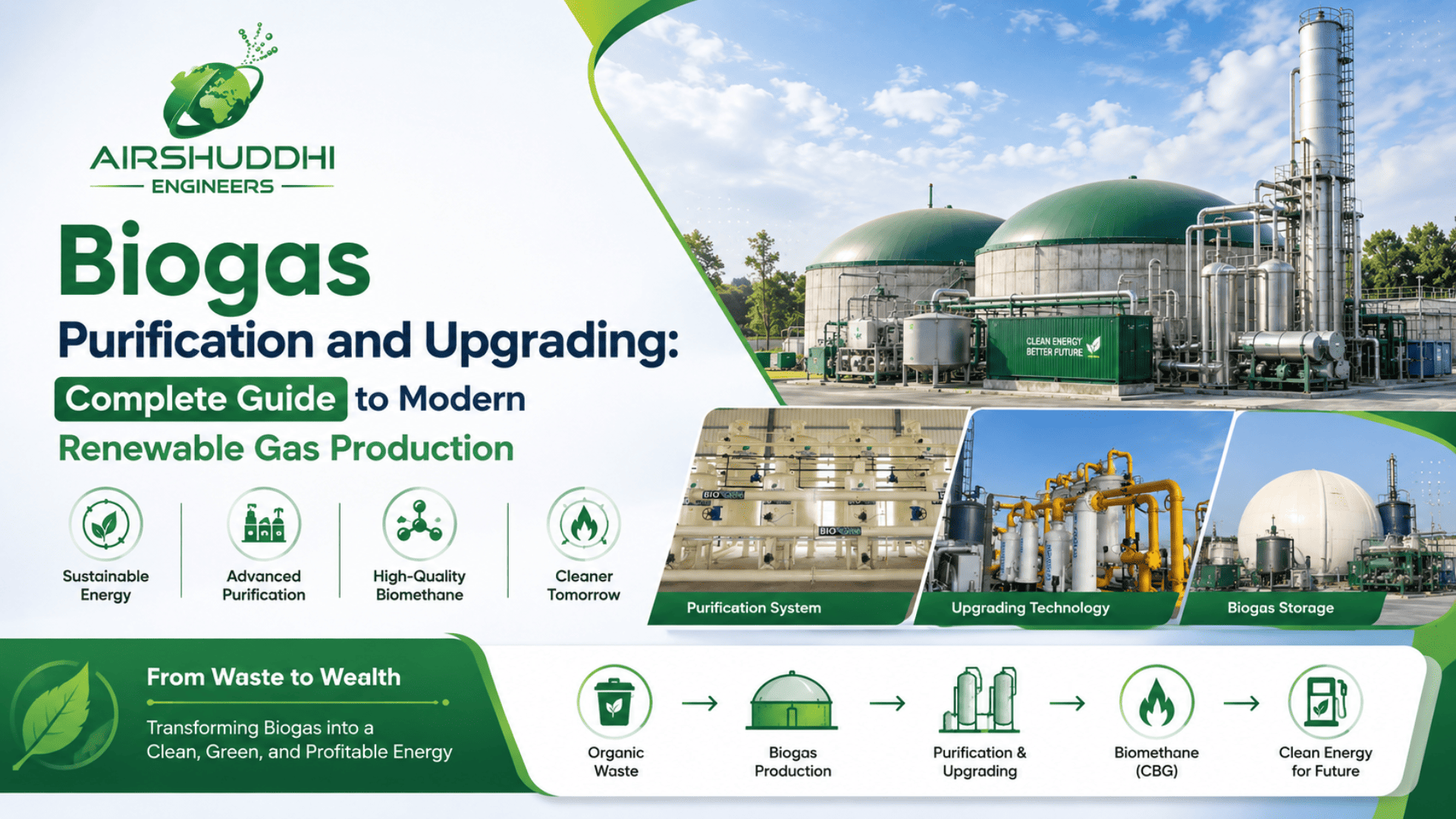
Organic Feedstock → Anaerobic Digestion → Raw Biogas → H₂S Removal → Gas Conditioning → CO₂ Separation → Methane Enrichment → Gas Quality Control → Compression → CBG Storage → Transportation or End Use
Each stage can affect the performance of the next.
For example, insufficient H₂S treatment can affect downstream equipment, while poor moisture control can create problems during compression. Similarly, an upgrading system that is not correctly matched to the raw gas may affect methane recovery and final production economics.
This is why project integration is one of the most important services provided by an experienced Biogas Purification Company.
A complete system may include different equipment depending on plant capacity and technology.
Important Biogas Purification Equipment can include:
Equipment should be selected as part of an integrated process rather than purchased individually without considering system compatibility.
Hydrogen sulphide is one of the contaminants that requires careful management in biogas applications.
H₂S can contribute to:
An H₂S Biogas Scrubber or another appropriate desulphurization system can be incorporated into the gas-treatment section.
The correct treatment approach depends on the H₂S concentration, gas flow, operating conditions and required outlet specification.
Modern CBG projects increasingly require reliable monitoring of production and gas quality.
The recently published GOBARdhan guidelines include provisions relating to real-time monitoring, online gas-quality measurement and automatic shut-off systems for beneficiaries.
This reflects a broader shift toward more measurable and controlled renewable-gas operations.
Gas monitoring can help operators track parameters such as:
Continuous monitoring can help identify changes in gas composition and support more consistent plant operation.
Producing a high methane concentration is important, but methane recovery also matters.
If valuable methane is lost during purification, the effective output of the plant can decline.
Therefore, an advanced Biogas Upgradation Plant should be evaluated using several parameters rather than methane purity alone.
Project developers should consider:
The objective should be to achieve the required gas quality while maintaining efficient use of the methane contained in the raw biogas.
The demand for CBG and Bio-CNG is closely connected with India's wider renewable-energy and waste-management objectives.
The Ministry of Petroleum and Natural Gas states that SATAT was introduced to establish an ecosystem for producing CBG from waste and biomass, while oil and gas marketing companies have invited entrepreneurs to supply CBG for marketing.
The broader market is now moving toward more integrated CBG projects involving:
The IEA also identifies CBG as a major contributor to India's expected growth in gaseous biofuels, supported by India's large agricultural and organic-waste resource base.
Choosing a Biogas Purification Company in India should involve more than comparing equipment prices.
A project developer should evaluate the supplier's capabilities in areas such as:
Does the company understand different biogas compositions and upgrading technologies?
Can the supplier coordinate purification, gas conditioning, compression and related equipment?
Is the solution designed according to actual feed gas characteristics rather than based on standard assumptions?
Can the proposed system consistently achieve the required methane and contaminant specifications?
Does the technology minimize valuable methane losses?
Does the system provide appropriate measurement, control and safety functions?
Can the supplier support installation, commissioning and performance optimization?
Are technical assistance, maintenance and replacement components available when required?
These considerations can help businesses select a long-term technology partner instead of simply purchasing equipment.
Airshuddhi Engineers, based in Ahmedabad, Gujarat, India, provides technologies and equipment for biogas purification, gas separation and related industrial gas applications.
Its portfolio includes solutions such as:
For businesses evaluating a Biogas Purification Company, Airshuddhi Engineers can support projects requiring gas purification, separation and associated compression technologies.
The company's Ahmedabad location also provides a base for serving industrial and renewable-energy projects in Gujarat and other parts of India.
A major consideration in plant design is the source of the biogas.
Different feedstocks can produce gas with different characteristics.
Potential sources include:
This means a purification system designed for one application may not automatically be ideal for another.
A professional engineering assessment should therefore consider the expected feedstock mix and its impact on raw gas composition.
Biogas upgrading can create opportunities beyond compressed fuel.
Upgraded biomethane can potentially serve applications where higher-quality methane is required, subject to applicable standards and infrastructure.
At the same time, modern projects increasingly look at the complete resource-recovery model.
This can include:
Waste → Biogas → Biomethane/CBG + CO₂ Recovery + Fermented Organic Manure
The GOBARdhan framework itself emphasizes an integrated ecosystem involving CBG, infrastructure, digital monitoring and fermented organic manure.
This wider approach can improve the overall resource utilization potential of a biogas project.
As CBG projects become larger and more commercially structured, purification systems will need to deliver consistent performance rather than simply produce methane-rich gas.
Future-focused projects are likely to place greater emphasis on:
Research into advanced adsorption systems is already exploring simultaneous biomethane and high-purity biogenic CO₂ production, demonstrating the potential for more comprehensive utilization of the biogas stream.
A capable Biogas Purification Company plays a central role in converting raw biogas into a reliable renewable-gas product. For CBG and Bio-CNG projects, the right solution must consider the entire process, from contaminant removal and gas conditioning to methane upgrading, quality monitoring and compression.
The best technology is not necessarily the most complicated system. It is the solution that matches the project's feedstock, gas composition, capacity, gas-quality target, methane recovery requirement, energy availability and commercial objectives.
With the Indian CBG ecosystem increasingly emphasizing offtake, infrastructure, monitoring and project integration, businesses need experienced technology partners that can provide practical and scalable purification solutions.
Airshuddhi Engineers, Ahmedabad, Gujarat, provides biogas purification, H₂S removal, membrane separation, PSA and related gas-treatment technologies for renewable-gas applications. To explore its solutions, visit www.airshuddhi.com.
A Biogas Purification Company provides technologies and engineering solutions for removing contaminants and excess CO₂ from raw biogas and increasing methane concentration for applications such as CBG, Bio-CNG and biomethane.
There is no single technology that is best for every project. Membrane separation, PSA, VPSA, water scrubbing and other technologies can be suitable depending on gas composition, capacity, methane-recovery requirements, energy consumption and project economics.
H₂S can cause corrosion and affect downstream equipment. Appropriate desulphurization helps protect purification, compression and utilization systems while improving gas quality.
A Biogas Upgradation Plant separates unwanted components, particularly CO₂, from raw biogas to increase methane concentration and produce gas suitable for higher-value applications such as CBG or biomethane.
Yes. A properly designed purification and upgrading system can prepare biogas for CBG production when combined with suitable compression, storage and gas-quality systems.
Consider technology experience, raw-gas analysis, methane recovery, gas-quality capability, equipment integration, automation, safety systems, installation support, commissioning and after-sales service.
Purification generally refers to removing contaminants such as H₂S and moisture, while upgrading commonly focuses on separating CO₂ and increasing methane concentration. In a commercial plant, both functions can form part of an integrated gas-treatment system.
Potentially, yes. However, different feedstocks can produce different gas compositions. The purification system should therefore be designed after evaluating the expected feedstock and raw biogas characteristics.
Methane is the valuable energy component of biogas. High methane recovery helps reduce product losses and can improve the overall efficiency and economics of the CBG production process.
Online monitoring can provide continuous information about gas composition and operating conditions. It can help operators maintain required gas quality, identify process changes and improve operational control.