Call Us

-
-
-
Office Address
401 & 402, Smart Walls, Nr Science City Circle, SP Ring Road, Ahmedabad-380060, Gujarat (INDIA)
Office Address
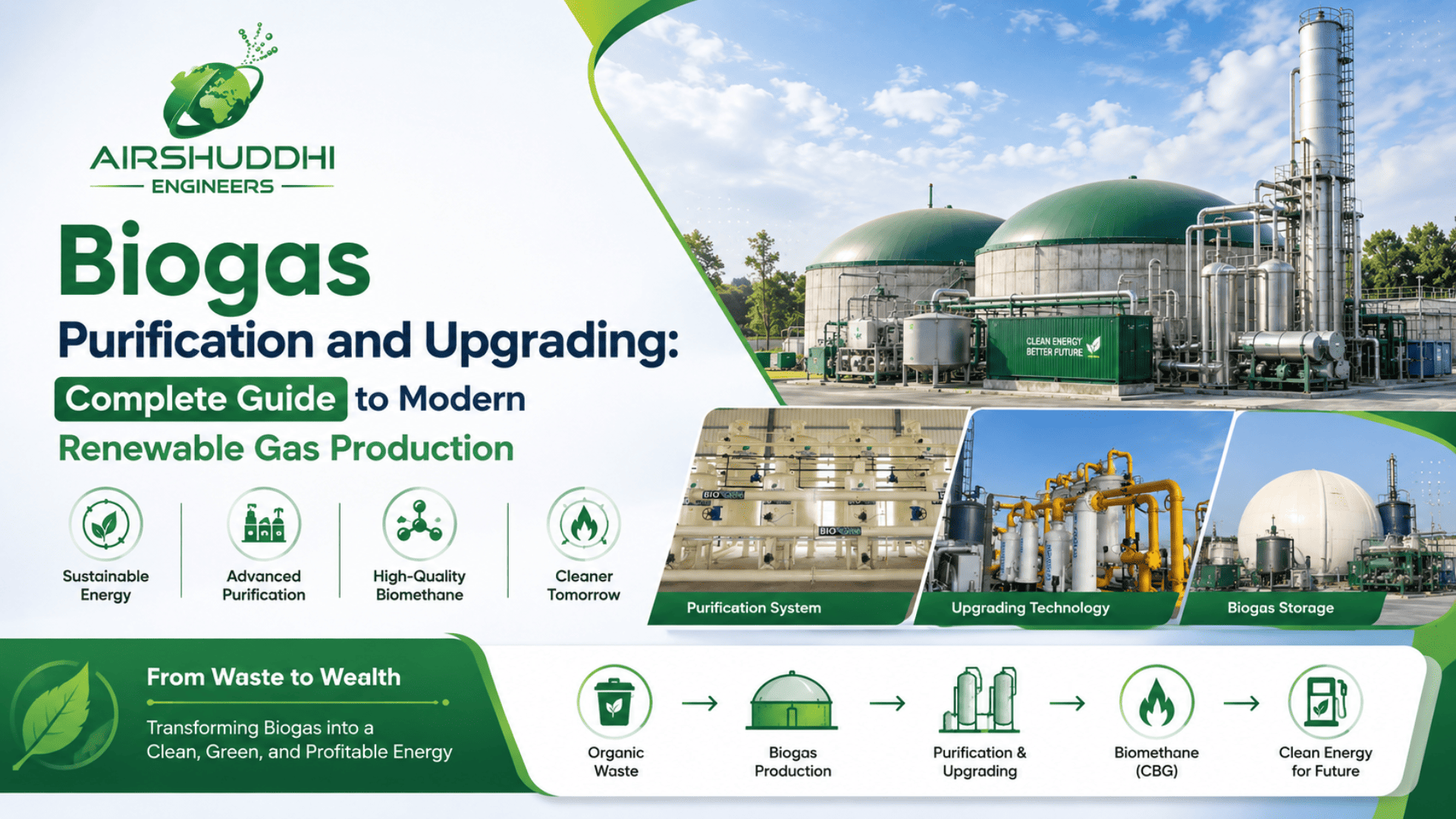
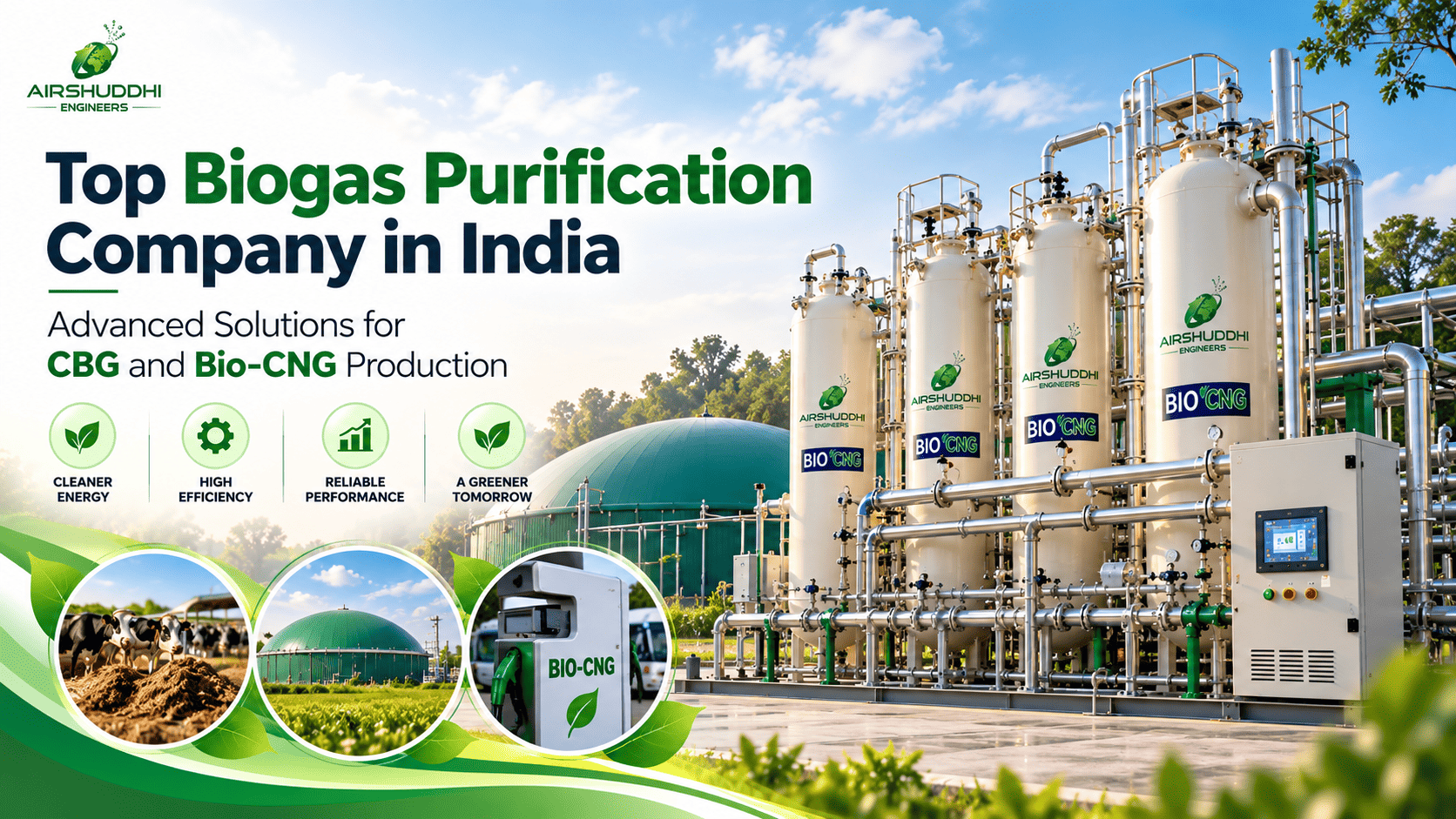
India's renewable-energy sector is increasingly looking at organic waste as a valuable source of clean fuel. Biogas purification and upgrading play a critical role in this process by converting raw biogas into a methane-rich gas suitable for applications such as Compressed Biogas (CBG), Bio-CNG, biomethane, industrial fuel, and renewable energy generation.
Unlike conventional biogas applications, modern renewable-gas projects require consistent gas quality, efficient methane recovery, controlled operating costs, and reliable purification systems. This makes the selection of the right biogas upgrading technology an important part of project planning.
For businesses developing CBG plants, waste-to-energy projects, dairy biogas plants, agricultural-waste projects, or industrial biogas systems, understanding how purification and upgrading work can help in making better technology and investment decisions.
In this guide, we explain the fundamentals of biogas purification, modern biogas upgrading technologies, methane recovery, gas cleaning, and important considerations for renewable-gas projects.
Raw biogas is produced when organic material decomposes in an oxygen-free environment through anaerobic digestion. The resulting gas contains methane, but it also contains several unwanted components.
Typical raw biogas may contain:
Biogas Purification focuses on removing contaminants such as H₂S, moisture, and other unwanted compounds.
Biogas upgrading primarily focuses on reducing CO₂ and increasing the concentration of methane in the treated gas.
These processes can work together to produce a cleaner, higher-quality renewable gas.
The exact treatment process depends on the feedstock, raw gas composition, plant capacity, required outlet specification, and final application.
Producing biogas is only the first stage of a renewable-gas project. The quality of the gas determines how effectively it can be used.
Raw biogas may not be suitable for certain high-value applications because CO₂ reduces its energy density while H₂S and moisture can create problems for downstream equipment.
A properly designed biogas purification plant can help:
For projects targeting CBG production, purification and upgrading are particularly important because the gas must meet the required quality parameters before compression, storage, transportation, or utilization.
These terms are sometimes used interchangeably, but they describe different stages of gas treatment.
Biogas cleaning generally involves removing contaminants that can damage equipment or affect gas quality.
Common treatment requirements include:
Biogas upgrading primarily targets the separation of CO₂ from methane.
The objective is to produce a methane-rich gas with characteristics appropriate for the intended application.
Therefore, a complete renewable-gas system may include:
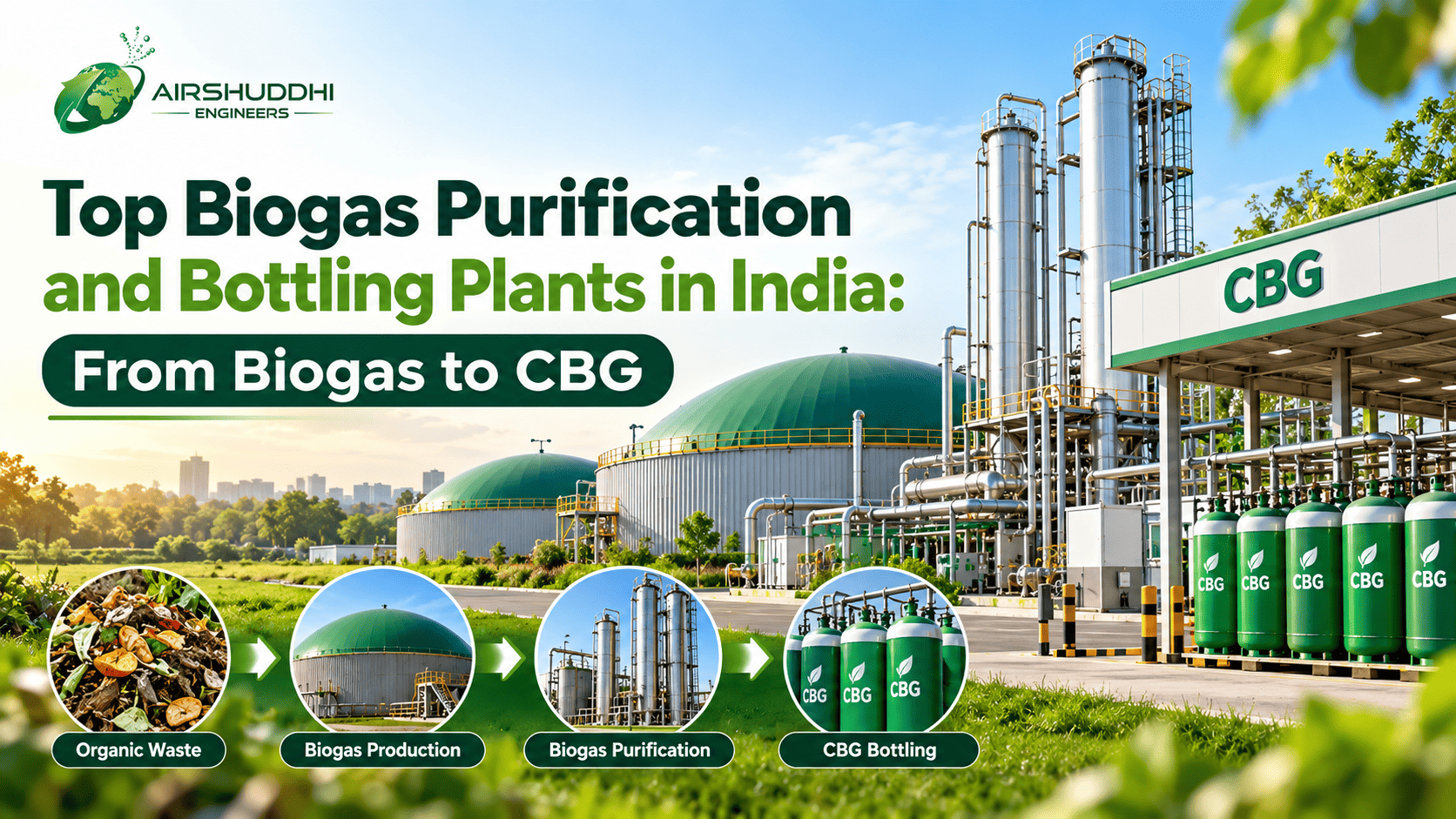
Raw Biogas → Gas Cleaning → H₂S Removal → Moisture Treatment → CO₂ Removal → Biogas Upgrading → Compression → CBG/Biomethane
The exact configuration depends on the project.
Different technologies can be used to separate CO₂ from methane. The most suitable option depends on plant capacity, gas composition, required gas quality, methane recovery, energy consumption, and project economics.
Pressure Swing Adsorption (PSA) is an established gas-separation technology that uses adsorption materials and pressure cycles.
During the process, certain gases are preferentially adsorbed while methane passes through the system. Pressure changes are then used to regenerate the adsorption material.
PSA can be considered for projects where:
Proper system design is important because pressure, cycle time, feed composition, adsorbent selection, and operating conditions can influence performance.
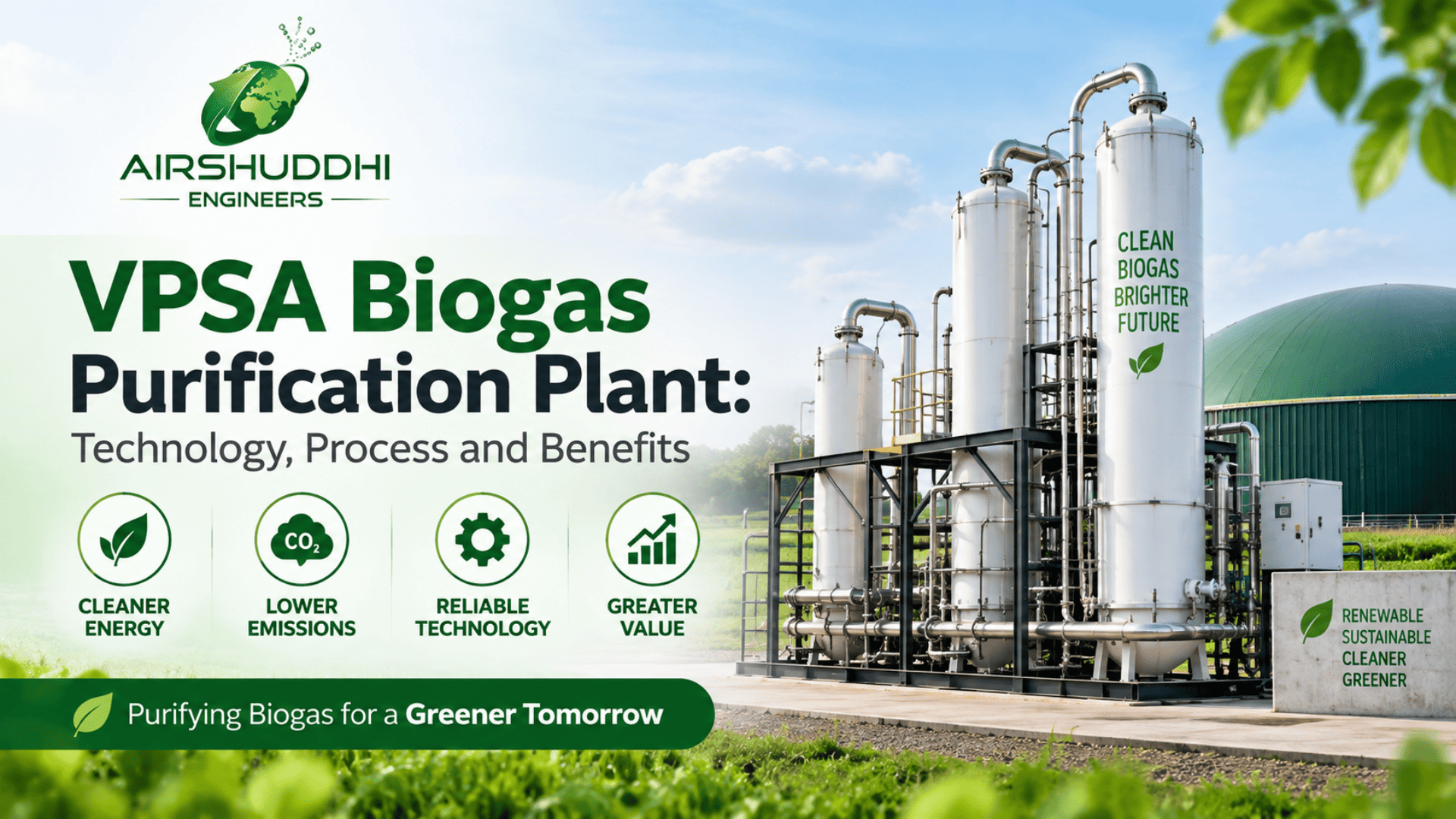
Vacuum Pressure Swing Adsorption (VPSA) uses a combination of pressure and vacuum cycles for gas separation.
VPSA technology can be considered for renewable-gas projects where developers are evaluating:
The suitability of VPSA depends on the actual characteristics of the raw biogas and the required product-gas specification.
For this reason, technical analysis should be completed before selecting a VPSA system.
Membrane biogas separation uses selective membranes that allow certain gases to pass through more easily than others.
Membrane systems are increasingly considered for renewable-gas applications because they can provide compact configurations and continuous gas separation.
Potential advantages include:
However, membrane performance depends strongly on feed-gas quality. Proper pretreatment of H₂S, moisture, oil, and other contaminants may therefore be required.
Water scrubbing uses the different solubility characteristics of gases in water.
CO₂ and some contaminants are more soluble in water than methane. This difference can be used to separate unwanted components from biogas.
The suitability of water scrubbing depends on factors such as:
Absorption-based systems can also be used for CO₂ removal from biogas.
Depending on the process, a solvent or other absorption medium captures CO₂ while allowing methane to remain in the gas stream.
These systems can be considered for specific large-scale or specialized applications where the technology fits the project's gas composition and operating requirements.
Hydrogen sulfide (H₂S) is one of the most important contaminants that must be considered in a biogas project.
H₂S can contribute to:
For this reason, an appropriate H₂S biogas scrubber or desulfurization system can be an essential part of a complete gas-treatment plant.
The required H₂S treatment depends on the raw-gas concentration and the requirements of the downstream equipment.
A good purification system should be designed after analyzing the actual gas rather than relying on standard assumptions.
Many project developers focus primarily on final gas purity. However, methane recovery is equally important.
Methane represents the valuable energy component of biogas. If significant methane is lost during purification, the project may lose potential energy output and revenue.
When comparing biogas upgrading systems, consider:
A system that achieves high gas purity but loses significant methane may not provide the best overall project economics.
The ideal system should balance gas quality, methane recovery, energy consumption, reliability, and operating cost.
The growth of Compressed Biogas (CBG) has increased demand for efficient gas purification and upgrading systems.
A typical CBG project may involve several interconnected stages:
The purification stage is therefore not an isolated piece of equipment. It is part of a larger renewable-fuel production system.
For a successful CBG project, developers should evaluate the complete process from feedstock availability through final gas utilization.
Several technical factors can influence the performance of a biogas purification plant.
The concentration of methane, CO₂, H₂S, moisture, nitrogen, oxygen, and trace contaminants affects technology selection.
Purification equipment must be appropriately sized for the expected biogas flow.
Changes in feedstock can result in changes in gas composition and production.
A CBG project may have different gas-quality requirements compared with a plant producing biogas for captive power.
Higher methane recovery can improve the utilization of the available renewable gas.
Electricity consumption directly affects operating costs.
Instrumentation and process controls can help monitor gas quality, pressure, flow, and system performance.
The availability of spare parts, consumables, technical support, and trained operators can influence long-term reliability.
There is no single purification technology that is ideal for every biogas project.
Before selecting a system, project developers should evaluate:
A technology comparison should therefore be based on the complete project rather than simply comparing equipment prices.
The renewable-gas sector is evolving as industries search for cleaner alternatives to conventional fuels.
Some important trends include:
Compressed Biogas is becoming an important area of interest for waste-to-energy developers and industries looking for renewable fuel options.
Upgraded biogas can be used as biomethane, creating opportunities for industrial, transportation, and other energy applications.
Technologies such as VPSA, PSA, and membrane biogas upgrading are being evaluated for different project scales and gas compositions.
Project developers are increasingly looking beyond gas purity and evaluating methane recovery as an important performance indicator.
Automation, sensors, PLC controls, gas analyzers, and remote monitoring can provide better visibility into purification-plant performance.
Biogas projects can convert organic waste into renewable fuel while supporting resource recovery and reducing dependence on fossil energy.
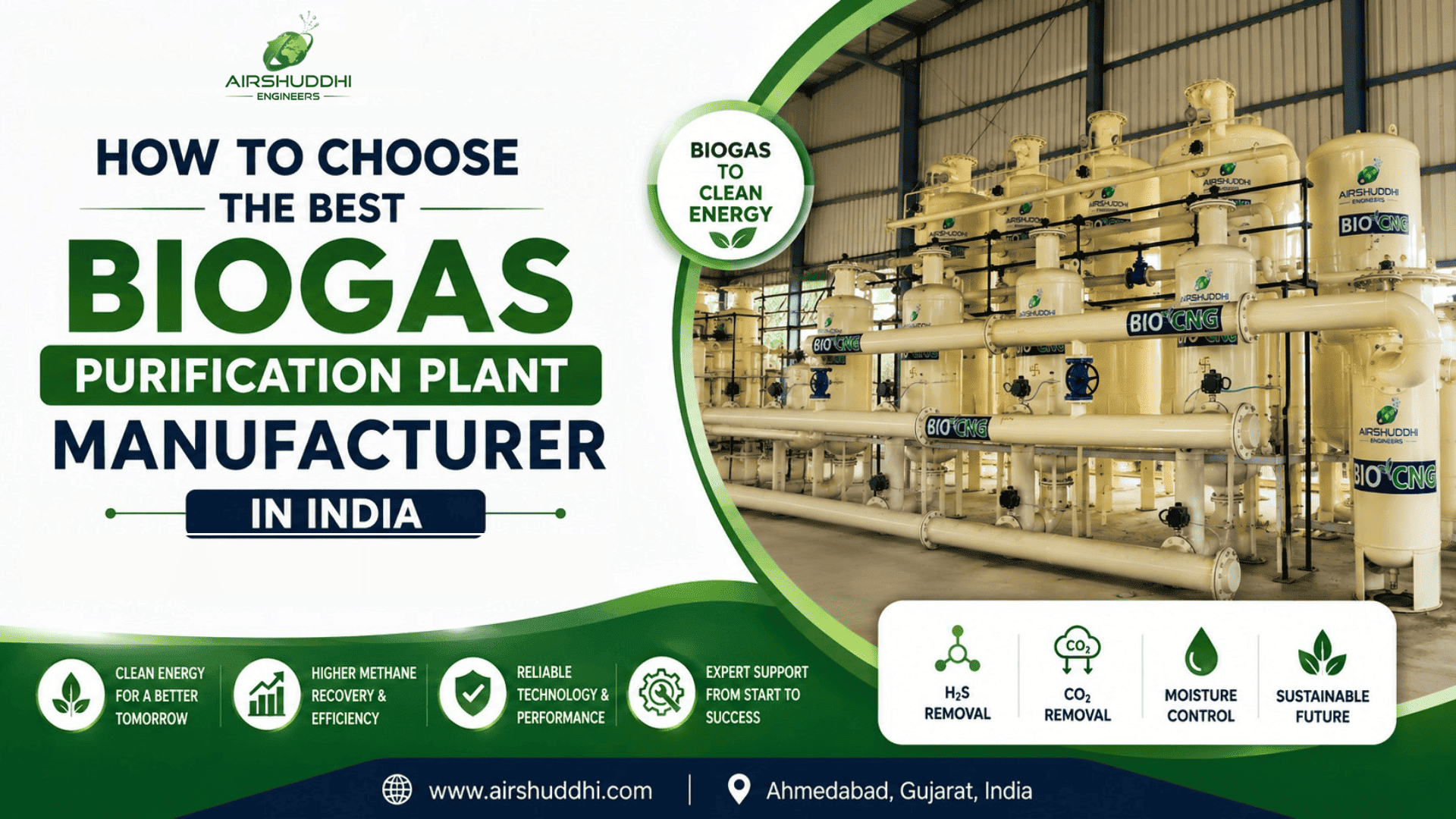
Airshuddhi Engineers, located in Ahmedabad, Gujarat, India, provides gas purification and treatment solutions for industrial and renewable-energy applications.
The company's solutions are relevant to projects requiring:
Airshuddhi Engineers focuses on providing technology solutions according to project requirements rather than treating every biogas application as identical.
For project developers, the first step should be a detailed understanding of the raw biogas. Gas composition, flow, pressure, contaminants, required product quality, and final application can then be considered while evaluating the appropriate purification technology.
Airshuddhi Engineers serves customers from Ahmedabad and provides solutions for organizations exploring biogas purification and renewable-gas applications.
Website: www.airshuddhi.com
A well-designed system can provide several potential benefits:
Actual performance depends on feedstock, gas composition, technology, equipment design, operating conditions, and maintenance.Conclusion
Biogas purification and upgrading are essential stages in converting raw biogas into a cleaner and more commercially useful renewable gas. As India's CBG, biomethane, and waste-to-energy sectors develop, efficient gas treatment technologies will become increasingly important for project developers.
PSA, VPSA, membrane separation, water scrubbing, and absorption technologies offer different approaches to gas upgrading. The right solution depends on the raw biogas composition, plant capacity, required gas quality, methane recovery, energy consumption, and final application.
A successful renewable-gas project should therefore look beyond the initial equipment cost. Methane recovery, operating efficiency, gas quality, maintenance, automation, scalability, and long-term technical support should all be part of the technology-selection process.
For businesses planning a CBG plant, Bio-CNG project, biomethane facility, or industrial biogas purification system, working with an experienced technology provider can simplify the process of evaluating suitable gas-treatment solutions.
Airshuddhi Engineers, based in Ahmedabad, Gujarat, India, provides solutions for biogas purification, biogas upgrading, VPSA purification, PSA purification, H₂S removal, and membrane biogas separation.
To explore biogas purification and renewable-gas solutions, visit www.airshuddhi.com.