Call Us

-
-
-
Office Address
401 & 402, Smart Walls, Nr Science City Circle, SP Ring Road, Ahmedabad-380060, Gujarat (INDIA)
Office Address
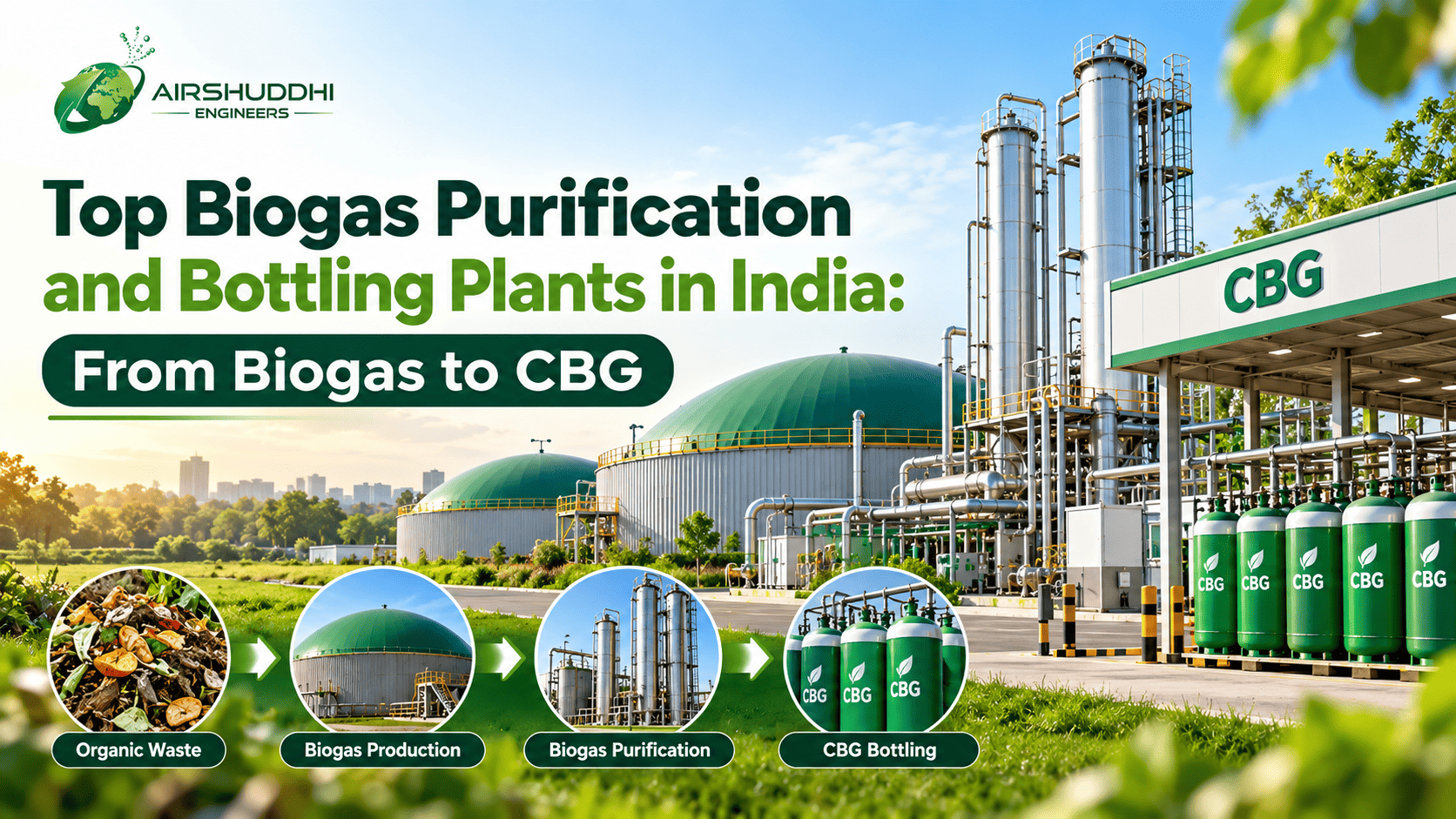
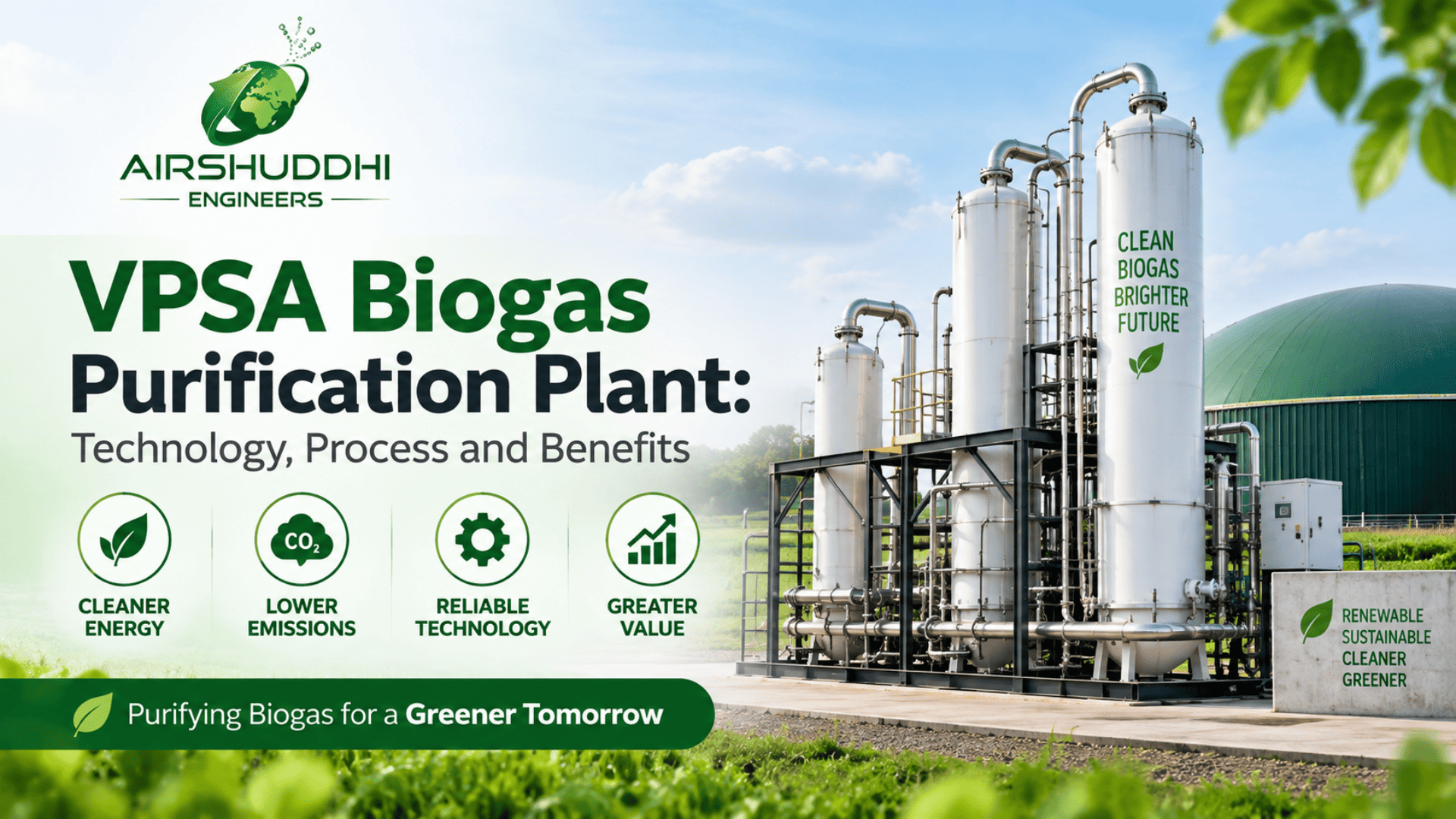
India is rapidly expanding its renewable-gas ecosystem by converting agricultural residues, cattle dung, food waste, industrial organic waste and other biodegradable feedstocks into useful energy. One important part of this transition is the development of Biogas Purification and Bottling Plants in India, which transform raw biogas into purified methane-rich gas that can be compressed, stored and supplied as Compressed Biogas (CBG) or Bio-CNG.
Raw biogas typically contains methane along with carbon dioxide, hydrogen sulphide, moisture and other trace components. According to the Ministry of New and Renewable Energy, biogas generally contains around 55–65% methane and 35–44% carbon dioxide, with traces of gases such as H₂S, nitrogen and ammonia. After suitable purification and upgrading, methane concentration can reach up to about 98%, making the gas suitable for high-pressure filling and transportation applications.
This makes the purification, upgrading, compression and bottling stages essential for converting biogas into a commercially usable renewable fuel.
Biogas Purification and Bottling Plants in India are integrated systems designed to process raw biogas and prepare it for use as a compressed renewable fuel.
A typical plant combines several treatment stages:
The objective is not simply to clean biogas. The complete system must produce gas with suitable quality, pressure and consistency for its intended application.
This is why selecting the right Biogas Purification and Bottling Plant Manufacturer is an important part of CBG project development.
The increasing interest in CBG Plant Manufacturer in India solutions is closely connected with India's wider renewable-energy and waste-management objectives.
Organic materials that might otherwise require disposal can become feedstock for anaerobic digestion. The resulting biogas can then be upgraded and compressed into a transportable fuel.
Current government initiatives are supporting the development of the CBG ecosystem through measures involving offtake, pricing, capital assistance, pipeline infrastructure, financing and technology development. The GOBARdhan framework approved in August 2026 also established a long-term policy framework intended to substantially expand domestic CBG production.
For project developers, this creates growing interest in:
A modern Biogas Compression and Bottling Plant normally follows a sequence of treatment and conditioning stages.
The process begins with biogas generated through anaerobic digestion.
Depending on the project, feedstock may include:
The gas generated by the digester is collected and directed towards the gas treatment section.
Hydrogen sulphide is an important contaminant because it can cause corrosion, unpleasant odour and operational problems in downstream equipment.
An H2S Biogas Scrubber or another suitable desulphurization system can be used to reduce hydrogen sulphide before the gas enters sensitive purification and compression equipment.
Effective H₂S removal can help protect:
The appropriate treatment method depends on feedstock composition, gas flow, H₂S concentration and required outlet quality.
Raw biogas contains moisture. Removing excess moisture is important before advanced upgrading and compression.
A gas-conditioning system can include:
This stage helps prepare the gas for the main upgrading technology.
Carbon dioxide is one of the major components that must be separated from raw biogas to increase methane concentration.
A Biogas Upgradation Plant can use different technologies depending on project requirements.
Common approaches include:
The technology should be selected according to gas composition, plant capacity, required methane recovery, outlet specifications, energy consumption and project economics.
The result is a methane-rich gas suitable for further compression.
Before compression, the upgraded gas should be checked against the required quality parameters.
Monitoring can include:
Consistent monitoring helps operators maintain stable plant performance and identify process deviations.
Purification alone does not create bottled CBG. The upgraded gas must be compressed to the pressure required for storage, transportation or dispensing.
This is where a Biogas Compression and Bottling Plant becomes particularly important.
A CBG compression section may include:
The compressor should be matched with the gas flow, inlet pressure, outlet pressure, operating schedule and required filling capacity.
Poorly matched compression equipment can affect energy consumption, reliability and overall plant performance.
Biogas Bottling Equipment refers to the systems used to compress, store, transfer and fill upgraded biogas into suitable high-pressure storage arrangements.
Depending on the project design, this may involve:
The complete bottling arrangement should be designed according to applicable safety requirements and the intended distribution model.
For larger projects, CBG can also be connected with suitable transportation or gas-grid infrastructure where technically and commercially appropriate.
Modern projects increasingly require more than basic gas cleaning. Advanced Biogas Purification Technology focuses on achieving reliable gas quality while managing methane recovery, energy consumption, operating cost and plant reliability.
Technology selection can depend on:
There is no single purification technology suitable for every project. A technically appropriate solution should be developed after analysing the actual gas composition and project requirements.
A modern Biogas Purification Plant can include multiple equipment sections working together.
Important equipment may include:
The equipment configuration varies according to the capacity and purification technology selected.
Once upgraded and compressed, CBG can support several applications.
CBG can be used as a renewable gaseous fuel for suitable vehicles and can complement existing CNG infrastructure where the required infrastructure and specifications are available.
Industries requiring gaseous fuel can explore CBG as part of their renewable-energy strategy, subject to fuel quality, equipment compatibility and commercial feasibility.
Commercial facilities with suitable gas consumption requirements may also consider renewable compressed gas solutions.
One of the major advantages of CBG production is that organic waste can become a feedstock rather than simply a disposal challenge.
This connects waste management, renewable energy and resource recovery within one project.
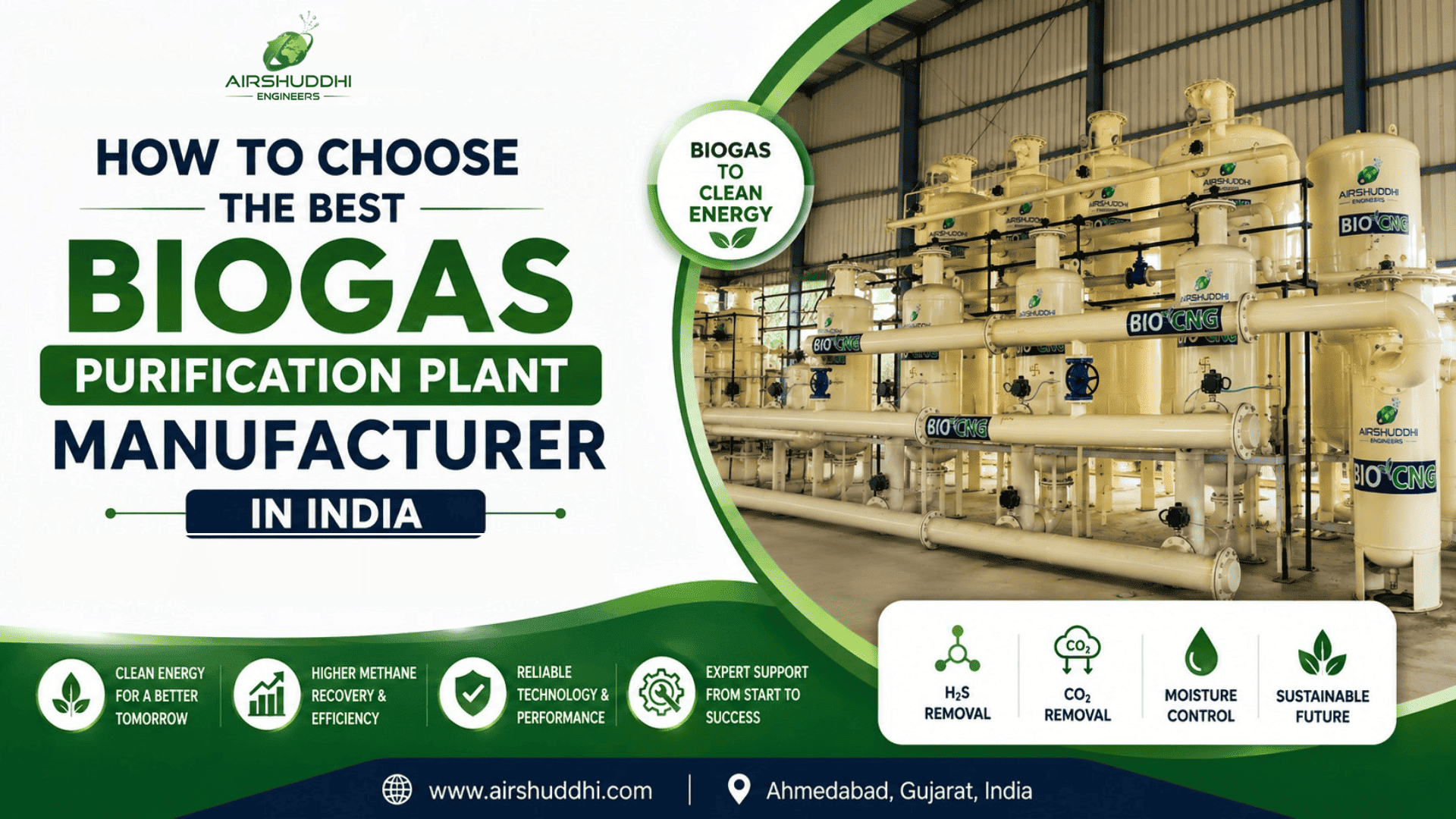
Selecting a Biogas Purification Company should involve more than comparing equipment prices.
Project developers should evaluate:
The complete system should be evaluated as one integrated process rather than as separate machines.
Airshuddhi Engineers, based in Ahmedabad, Gujarat, India, provides technologies and equipment related to biogas purification, gas separation and compression applications.
Its product portfolio includes solutions such as:
For developers looking for a Biogas Purification and Bottling Plant Manufacturer, an integrated approach can help connect gas purification with downstream compression and storage requirements.
Airshuddhi Engineers can be considered for projects where the requirement involves biogas treatment, purification, gas separation and related compression infrastructure.
Before finalising a Biogas Bottling Plant Manufacturer in India, project owners should prepare a detailed technical requirement.
Important questions include:
These questions can help project owners compare technically suitable solutions instead of choosing equipment based only on initial purchase cost.
A CBG Plant Manufacturer in India should ideally understand the complete value chain, from raw biogas treatment through upgrading, compression and storage.
A project may involve several interconnected systems:
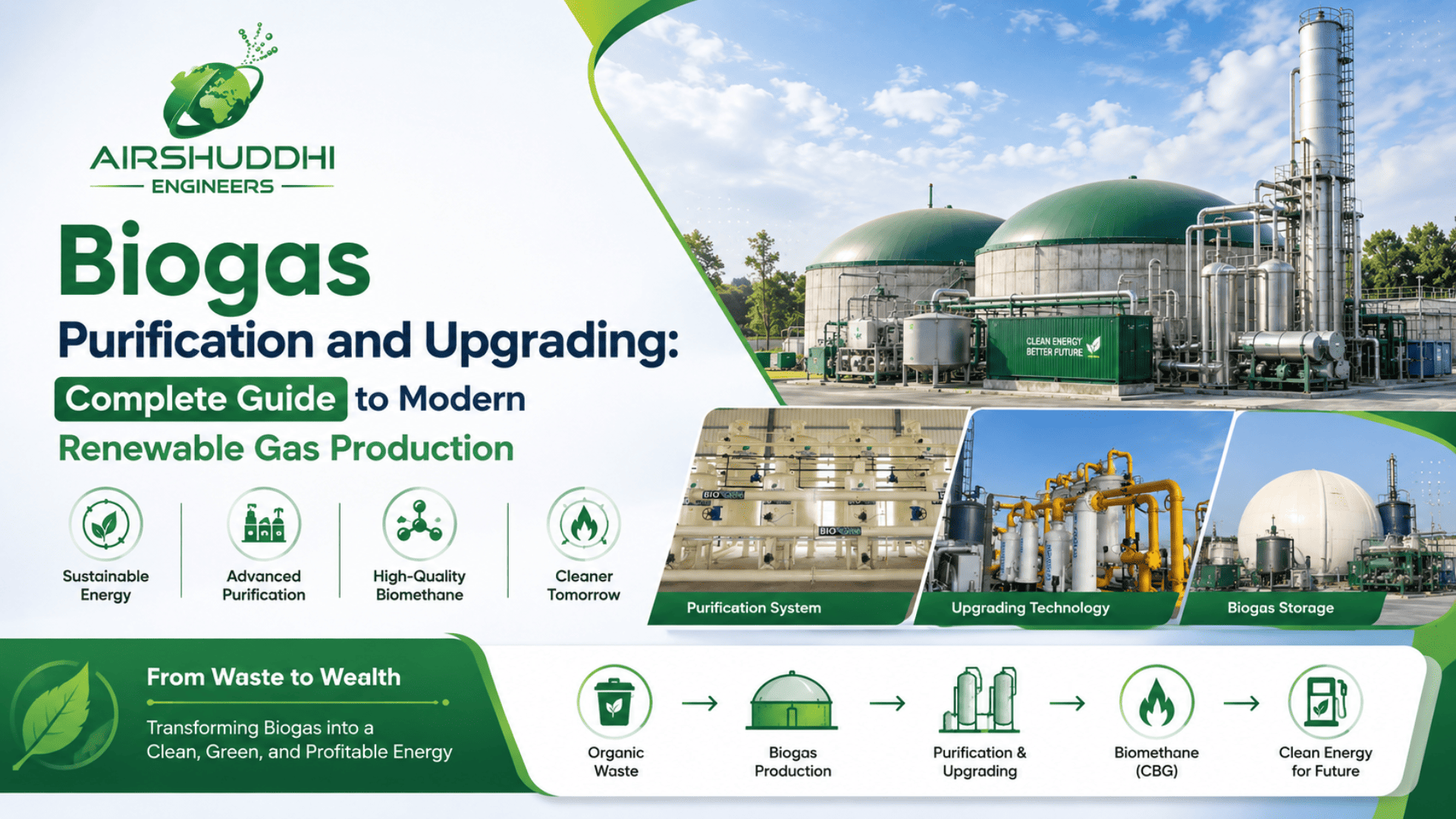
Feedstock → Anaerobic Digestion → Raw Biogas → H₂S Removal → Moisture Removal → CO₂ Separation → Methane-Rich Gas → Compression → Storage → CBG Bottling/Dispensing
The performance of each stage can influence the final CBG output.
Therefore, plant integration, engineering quality and process compatibility are important considerations for commercial-scale projects.
The current Indian CBG ecosystem is moving beyond individual biogas plants toward larger integrated projects involving feedstock aggregation, gas upgrading, compression, distribution and organic-manure utilization.
Government information published in 2026 reported more than 1,900 registered CBG/Bio-CNG plants, including commissioned and under-construction projects, showing the scale of activity in the sector.
The policy environment is also placing greater emphasis on reliable CBG offtake, infrastructure development and production growth.
This creates opportunities for technologies that can efficiently connect biogas generation with purification, upgrading, compression and CBG delivery.
Biogas Purification and Bottling Plants in India are becoming an important part of the renewable-gas value chain. By combining H₂S removal, moisture treatment, CO₂ separation, methane upgrading, compression and high-pressure storage, these plants can convert raw biogas into a more useful and transportable renewable fuel.
For businesses planning a CBG or Bio-CNG project, the right technology should be selected according to feedstock, gas composition, production capacity, gas-quality requirements, compression needs and project economics.
Airshuddhi Engineers, Ahmedabad, Gujarat, offers a range of biogas purification, gas separation, H₂S removal and compression-related solutions for renewable-gas applications. Visit www.airshuddhi.com to explore its biogas purification and gas-treatment technologies.
Biogas Purification and Bottling Plants in India are integrated facilities that remove contaminants and excess CO₂ from raw biogas, increase methane concentration and compress the upgraded gas for storage, transportation or CBG applications.
Raw biogas normally requires appropriate purification and conditioning before high-pressure bottling. H₂S, moisture, CO₂ and other contaminants need to be managed according to the required gas quality and application.
Depending on the project, technologies can include membrane separation, PSA, VPSA, water scrubbing and other upgrading methods. The appropriate choice depends on gas composition, capacity, required methane recovery and project specifications.
A Biogas Purification Plant primarily treats and upgrades raw biogas. A complete CBG plant can include additional systems for gas compression, high-pressure storage, filling, transportation or dispensing.
Typical Biogas Bottling Equipment can include gas compressors, filters, dryers, high-pressure pipelines, storage cascades, filling systems, pressure controls, instrumentation and safety systems.
When searching for a Best Biogas Purifier near me, location should not be the only consideration. Compare the supplier's purification technology, gas-flow capacity, feedstock experience, methane recovery, H₂S treatment, automation, commissioning support and after-sales service.
The terms CBG and Bio-CNG are commonly used for upgraded and compressed biogas used as a gaseous renewable fuel. The exact terminology and specifications can vary according to the project, application and applicable standards.
H₂S removal helps reduce corrosion and protect downstream purification, compression and gas-utilization equipment. The required treatment level depends on the raw gas composition and final application.
Consider the manufacturer's technology capability, project experience, equipment quality, plant integration, gas-quality targets, methane recovery, compression solution, safety engineering, installation support and after-sales service.
Yes. Depending on the project design, suitable feedstocks can include cattle dung, agricultural residues, food waste, organic municipal waste and other biodegradable materials. Feedstock quality and consistency are important factors in determining plant performance.