Call Us

-
-
-
Office Address
401 & 402, Smart Walls, Nr Science City Circle, SP Ring Road, Ahmedabad-380060, Gujarat (INDIA)
Office Address
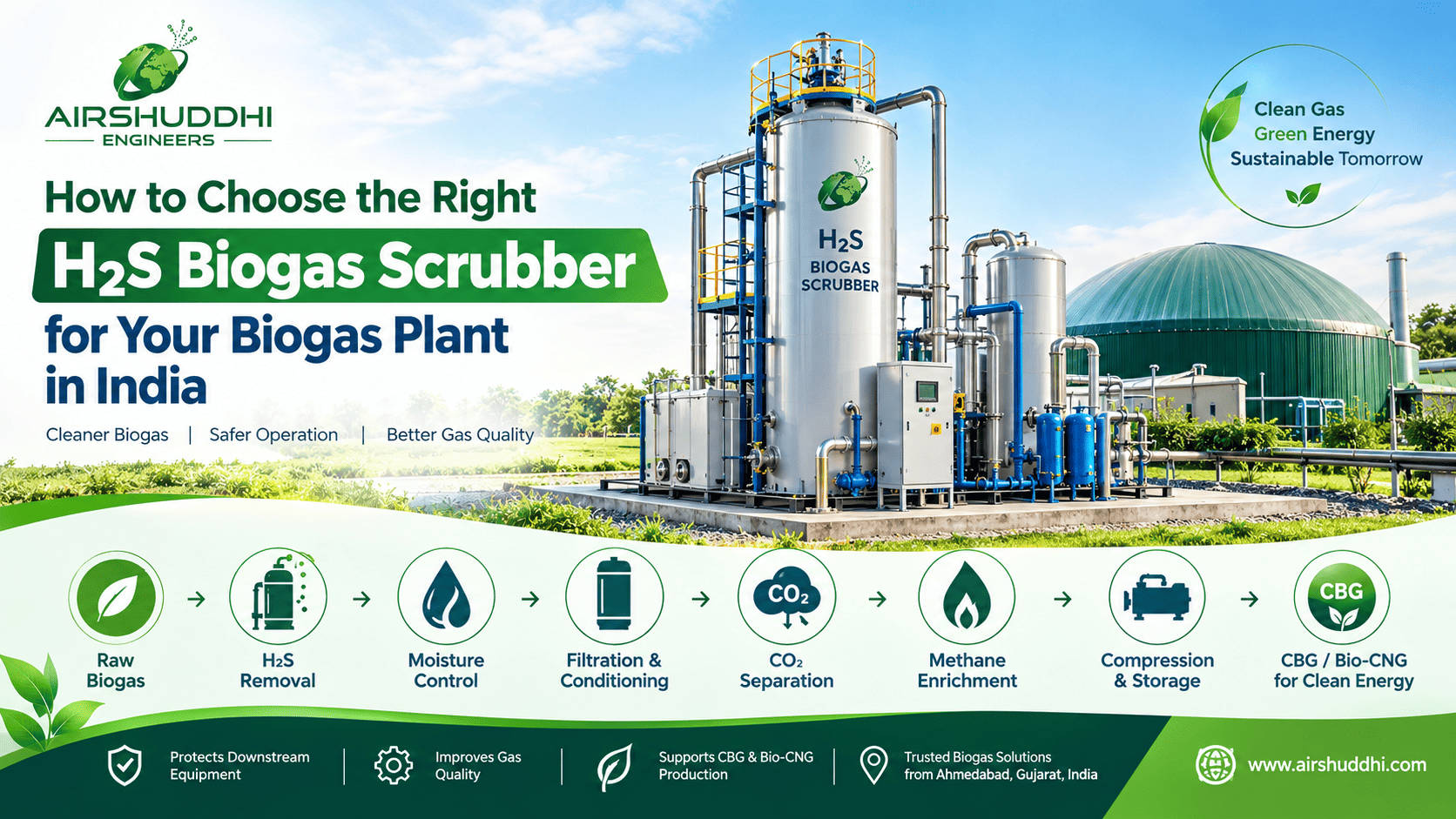
India’s expanding biogas and compressed biogas (CBG) sector is creating greater demand for reliable gas-treatment equipment. For biogas plant owners, EPC contractors, renewable energy developers, and industrial operators, selecting the right H2S Biogas Scrubber is an important engineering decision. An appropriately designed system can reduce hydrogen sulphide (H₂S), help protect downstream equipment, improve gas quality, and support consistent plant operation.
However, not every biogas project has the same gas composition, flow rate, operating conditions, or treatment requirements. A scrubber that performs well in one installation may not be suitable for another. Buyers should therefore evaluate the feed gas, required outlet quality, removal technology, operating costs, maintenance needs, and compatibility with the complete plant.
In this guide, Airshuddhi Engineers, based in Ahmedabad, Gujarat, India, explains the key factors to consider when choosing an H2S Scrubber for Biogas Plant applications.
An H2S Biogas Scrubber is a gas-treatment system designed to reduce hydrogen sulphide in raw biogas. Hydrogen sulphide is an unwanted sulphur-containing compound that can contribute to corrosion, unpleasant odours, and operational problems when biogas is used in engines, boilers, compressors, pipelines, or upgrading systems.
The concentration of H₂S depends on several factors, including the feedstock, anaerobic digestion process, operating conditions, and characteristics of the incoming gas. Agricultural waste, food-processing residues, sewage sludge, and other organic materials can produce biogas with different sulphide concentrations.
A suitable Biogas H2S Removal System helps address these variations by treating the gas according to the plant’s actual operating requirements.
Typical applications include:
Agricultural and organic-waste biogas plants
Municipal wastewater and sewage treatment facilities
Food-processing and industrial waste-to-energy projects
Biogas-based electricity generation
Biomethane and CBG production facilities
Industrial gas-treatment installations
The appropriate equipment depends on the gas characteristics and the required treatment performance.
Choosing a suitable system for Hydrogen Sulphide Removal from Biogas can help reduce operational risks and protect downstream equipment.
Hydrogen sulphide can contribute to corrosion, particularly when moisture and other relevant conditions are present. This can affect pipelines, valves, compressors, engines, and other gas-handling components.
An appropriately designed H2S Scrubber System helps reduce exposure to this contaminant and supports longer equipment service life.
Raw biogas contains a mixture of methane, carbon dioxide, water vapour, and other trace compounds. H₂S reduction is an important part of gas conditioning before many downstream applications.
The required outlet concentration should be established according to the specifications of the engine, boiler, upgrading equipment, or final gas application.
CBG projects often combine multiple gas-treatment stages. Depending on the feed gas and selected technology, H₂S removal may be required before CO₂ separation or other upgrading processes.
A properly selected Biogas Desulphurization System helps prepare the gas for subsequent treatment and can reduce the risk of contaminants affecting sensitive downstream components.
Hydrogen sulphide is toxic and can be dangerous at elevated concentrations. Gas-treatment equipment should therefore be designed, operated, and maintained with appropriate containment, detection, ventilation, and emergency procedures.
A scrubber reduces H₂S under its specified operating conditions, but it does not eliminate the need for gas detection, safe work practices, or confined-space precautions.
Before purchasing an H2S Scrubber for Biogas Plant applications, evaluate the following technical and commercial factors.
The first step is to understand the actual composition of the raw biogas. H₂S levels can vary with feedstock, digester performance, and changes in the process.
Request representative gas-analysis data covering:
Typical H₂S concentration
Minimum and maximum observed concentrations
Biogas flow rate
Moisture content and operating temperature
Relevant contaminants that may affect treatment
Variations during normal and peak production
Avoid selecting a scrubber based only on an estimated average H₂S concentration. Variable inlet conditions can influence media consumption, treatment efficiency, and maintenance frequency.
Scrubber capacity should be based on the expected gas flow rate and operating conditions. A unit selected without sufficient capacity may struggle during peak production, while excessive oversizing can increase capital expenditure unnecessarily.
Discuss the following requirements with the supplier:
Normal and maximum gas flow
Continuous or intermittent operation
Expected future production expansion
Available installation space
Pressure and temperature conditions
Required operating availability
For a growing biogas facility, consider whether the proposed configuration can accommodate future capacity increases without major modifications.
A low inlet concentration does not automatically guarantee that the treated gas will meet the final application's specifications. Buyers should establish an explicit outlet H₂S requirement before choosing the equipment.
Ask the supplier to clarify:
The guaranteed outlet H₂S concentration, where applicable
The operating conditions associated with that guarantee
The sampling and testing method
Expected performance during inlet concentration changes
The monitoring arrangements used to verify performance
The correct target should be based on downstream equipment requirements and applicable project specifications rather than an arbitrary removal percentage.
Different treatment methods may be appropriate depending on gas composition, flow rate, sulphide loading, operating costs, and project objectives.
Common approaches include:
Iron-based media: Certain iron-containing materials react with H₂S and may be suitable for applications where media replacement and disposal can be managed.
Activated carbon H₂S scrubber: Specially selected carbon media can capture or react with H₂S, depending on the media formulation and operating conditions. Humidity, gas composition, and media life can influence performance.
Chemical scrubbing: A suitable chemical solution absorbs or reacts with H₂S. Chemical consumption, corrosion control, effluent management, and handling procedures must be considered.
Biological treatment: Microorganisms can convert H₂S into other sulphur compounds under controlled conditions. Process stability and management of sulphur-containing by-products are important considerations.
Other engineered desulphurization systems: Some installations use specialized media or integrated treatment configurations based on project requirements.
These options should not be treated as interchangeable. The right Biogas H2S Removal System is the one that matches the actual gas conditions, treatment target, site constraints, and total operating budget.
The initial equipment cost is only one part of the investment. A low-priced scrubber may have higher recurring costs if it requires frequent media replacement, substantial chemical consumption, or intensive maintenance.
Compare the estimated lifecycle cost, including:
Initial equipment and installation
Electricity and auxiliary utilities
Replacement media or chemical consumption
Labour and scheduled maintenance
Waste handling and disposal
Gas testing and monitoring equipment
Downtime and production losses
Availability of technical support and spare parts
For an Activated Carbon H2S Scrubber India project, for example, buyers should request realistic estimates for media service life under their expected gas conditions instead of relying only on generic replacement intervals.
Modern industrial buyers increasingly prioritize process visibility, automation, and measurable operating performance. These considerations are particularly relevant when biogas plants operate continuously or supply gas to downstream upgrading equipment.
Depending on the system design, useful monitoring features may include:
Inlet and outlet H₂S measurement
Gas-flow monitoring
Pressure and differential-pressure indication
Temperature monitoring where required
Alarms for abnormal operating conditions
Operating-hour and maintenance records
Data logging or integration with a plant control system
Continuous monitoring may not be necessary for every small installation, but suitable measurement arrangements help operators identify breakthrough, changing inlet conditions, and maintenance requirements.
A scrubber must remain serviceable throughout its operating life. Before finalizing a purchase, review how the equipment will be inspected, cleaned, replenished, or serviced.
Ask the H2S Scrubber System Manufacturer about:
Recommended inspection frequency
Media replacement or regeneration procedures
Safe isolation and depressurization
Required consumables and spare parts
Operator training
Troubleshooting support
Warranty terms and service availability
A clearly documented maintenance plan helps avoid unexpected shutdowns and supports more predictable plant operation.
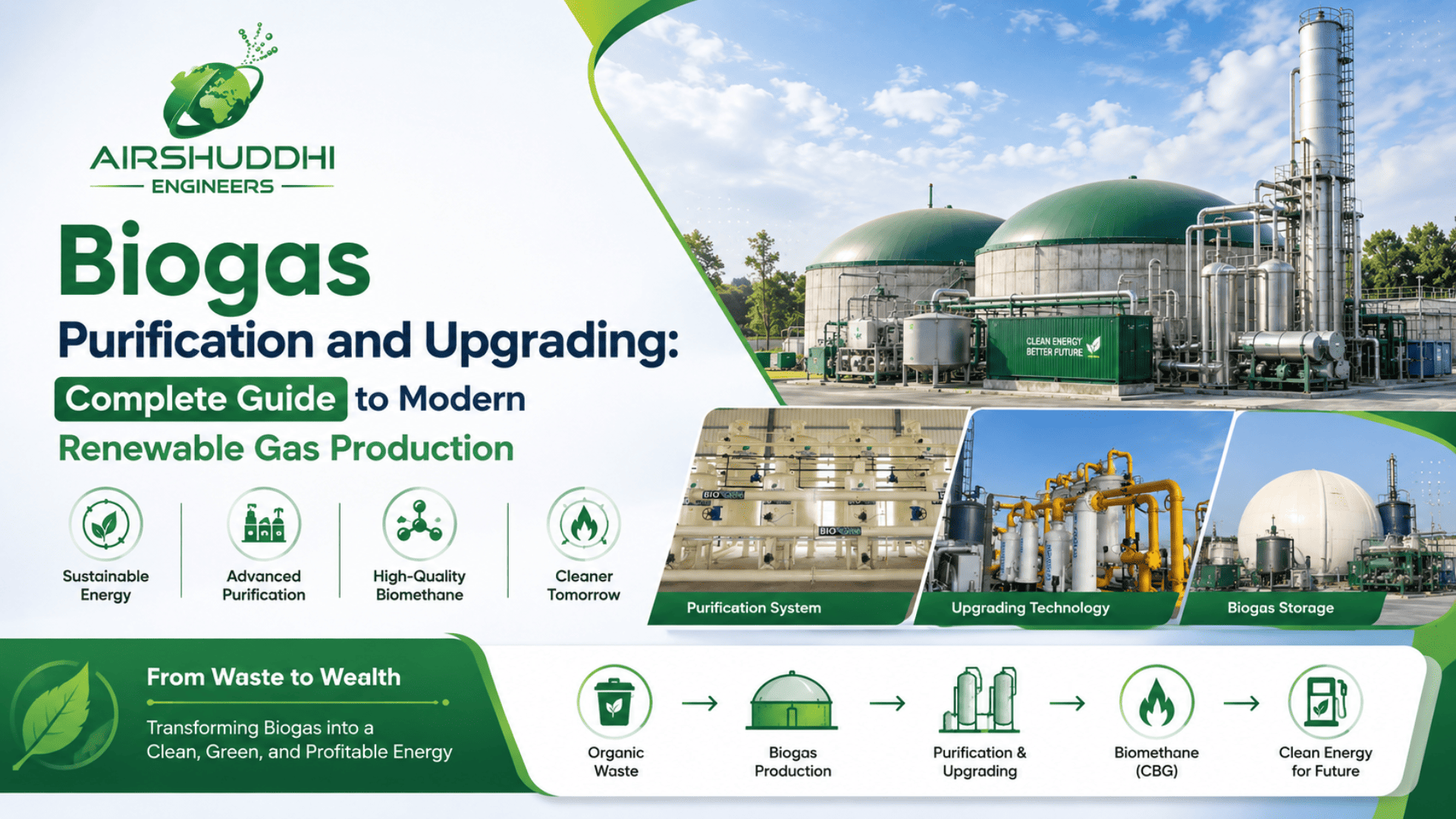
An H₂S scrubber primarily addresses hydrogen sulphide reduction. A complete biogas upgrading system has a broader purpose: increasing methane concentration by removing carbon dioxide and managing other impurities as required.
Depending on the project, the complete treatment train may include:
Moisture separation or drying
H₂S removal
Filtration or other pretreatment
CO₂ separation through an appropriate upgrading technology
Final gas-quality verification
Compression and storage equipment where required
The exact sequence depends on the selected technologies and feed-gas characteristics. For example, some CO₂ separation technologies have specific requirements for H₂S pretreatment, so the equipment supplier should confirm compatibility across the complete process.
Selecting a scrubber independently without checking downstream requirements can lead to avoidable integration problems.
Buyers can reduce project risk by avoiding these common mistakes:
Choosing only by price: Compare lifecycle cost and performance, not just the initial quotation.
Ignoring gas variability: The inlet H₂S concentration may change with feedstock and process conditions.
Assuming every technology works the same way: Media-based, chemical, and biological systems have different operating requirements.
Overlooking by-product disposal: Spent media, sulphur-containing residues, or liquid waste may require appropriate handling.
Skipping performance verification: Define the outlet specification and the method used to verify it.
Ignoring safety measures: Provide appropriate gas detection, isolation, ventilation, and operating procedures.
Failing to plan maintenance: Confirm consumable availability and establish an inspection schedule before commissioning.
A technically suitable scrubber should be evaluated as part of the complete plant, not simply as an isolated equipment purchase.
When evaluating an H2S Scrubber Manufacturer in India, focus on engineering suitability, product documentation, and the supplier's ability to understand your operating conditions.
Use this checklist before requesting a quotation:
Does the supplier ask for actual gas-analysis data?
Can the proposed system handle the required gas flow?
Is the outlet H₂S specification clearly documented?
Are media, chemical, or other operating requirements explained?
Does the proposal include instrumentation and safety considerations?
Are installation, commissioning, and maintenance requirements defined?
Can the system integrate with the existing or planned biogas plant?
Are spare parts and technical assistance available?
If you are searching for a Top Hydrogen Sulphide Scrubber Manufacturer in India or the Best H2S Removal Plant for Biogas India, compare suppliers against these measurable requirements rather than relying on promotional claims alone.
Airshuddhi Engineers, located in Ahmedabad, Gujarat, India, provides gas-treatment and biogas equipment solutions for renewable energy and industrial applications. Its product portfolio includes an H2S Biogas Scrubber, alongside biogas purification and membrane gas-separation solutions.
For project developers, the selection process should begin with the characteristics of the raw biogas, the required treatment capacity, and the outlet H₂S specification. These details help determine which configuration is suitable for the plant.
When discussing your requirements with Airshuddhi Engineers, prepare information about:
Plant capacity and expected biogas flow
Available inlet H₂S test results
Intended gas application, such as power generation or CBG production
Required outlet gas quality
Site conditions and available utilities
Expected operating schedule and maintenance preferences
This information helps establish a more relevant technical discussion and supports evaluation of the proposed equipment.
Explore the H2S Biogas Scrubber solutions from Airshuddhi Engineers or visit Airshuddhi Engineers to learn more about its gas-treatment portfolio.
Choosing the right H2S Biogas Scrubber requires more than comparing equipment prices or advertised removal efficiencies. Buyers should evaluate inlet gas composition, treatment capacity, outlet specifications, technology suitability, lifecycle costs, monitoring, maintenance, and integration with downstream equipment.
For biogas, biomethane, and CBG projects in India, a well-matched Biogas Desulphurization System can help protect equipment, maintain gas quality, and support reliable plant operation when correctly designed and maintained.
By reviewing these factors before procurement, plant owners can make a more informed decision and select an H₂S treatment solution aligned with their operational and commercial objectives.
An H2S Biogas Scrubber reduces hydrogen sulphide in raw biogas. It helps protect downstream equipment from sulphide-related corrosion and prepares the gas for applications that require controlled H₂S levels.
Evaluate inlet H₂S concentration, gas flow rate, required outlet quality, removal technology, operating costs, maintenance requirements, safety features, and compatibility with downstream equipment.
An Activated Carbon H2S Scrubber India installation may be suitable for certain gas flows and sulphide loads. Its performance depends on the carbon formulation, operating conditions, gas composition, and media replacement or regeneration requirements.
Important factors include inlet H₂S concentration, gas flow, contact conditions, temperature, moisture, selected media or treatment chemistry, and the condition of the treatment system.
H₂S removal is often an important pretreatment step for CBG production. The required treatment level and process sequence depend on the selected upgrading technology, gas specifications, and downstream equipment requirements.
Maintenance frequency depends on the treatment technology, sulphide loading, operating hours, and manufacturer recommendations. Regular inspection and appropriate inlet and outlet gas testing help determine when service is required.
An H₂S scrubber focuses on reducing hydrogen sulphide. A complete biogas purification or upgrading plant may also manage moisture, carbon dioxide, and other impurities to achieve the quality required for its intended application.
Many industrial systems can be designed for continuous operation, but suitability depends on the equipment configuration, treatment method, gas load, maintenance strategy, and required plant availability.
Ask about design capacity, inlet and outlet H₂S specifications, expected operating costs, consumables, instrumentation, safety measures, maintenance, waste handling, warranty, and technical support.
Compare suppliers on engineering capability, suitability for your gas conditions, documented performance requirements, equipment integration, lifecycle cost, service support, and the clarity of their technical proposal. Airshuddhi Engineers in Ahmedabad offers an H₂S biogas scrubber as part of its gas-treatment portfolio.